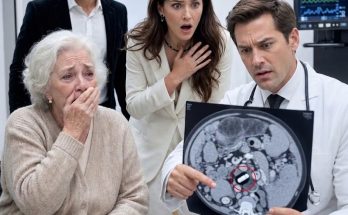
My husband asked me to divorce him shortly after he learned his cancer was stage four. Just weeks later, he married someone else. Robert and I had shared thirty-nine years, so when he said he
wanted his final months with Claire, a younger colleague, I felt our whole marriage disappear in a single afternoon. Three weeks after the divorce, they married. Four months later, he died. Our
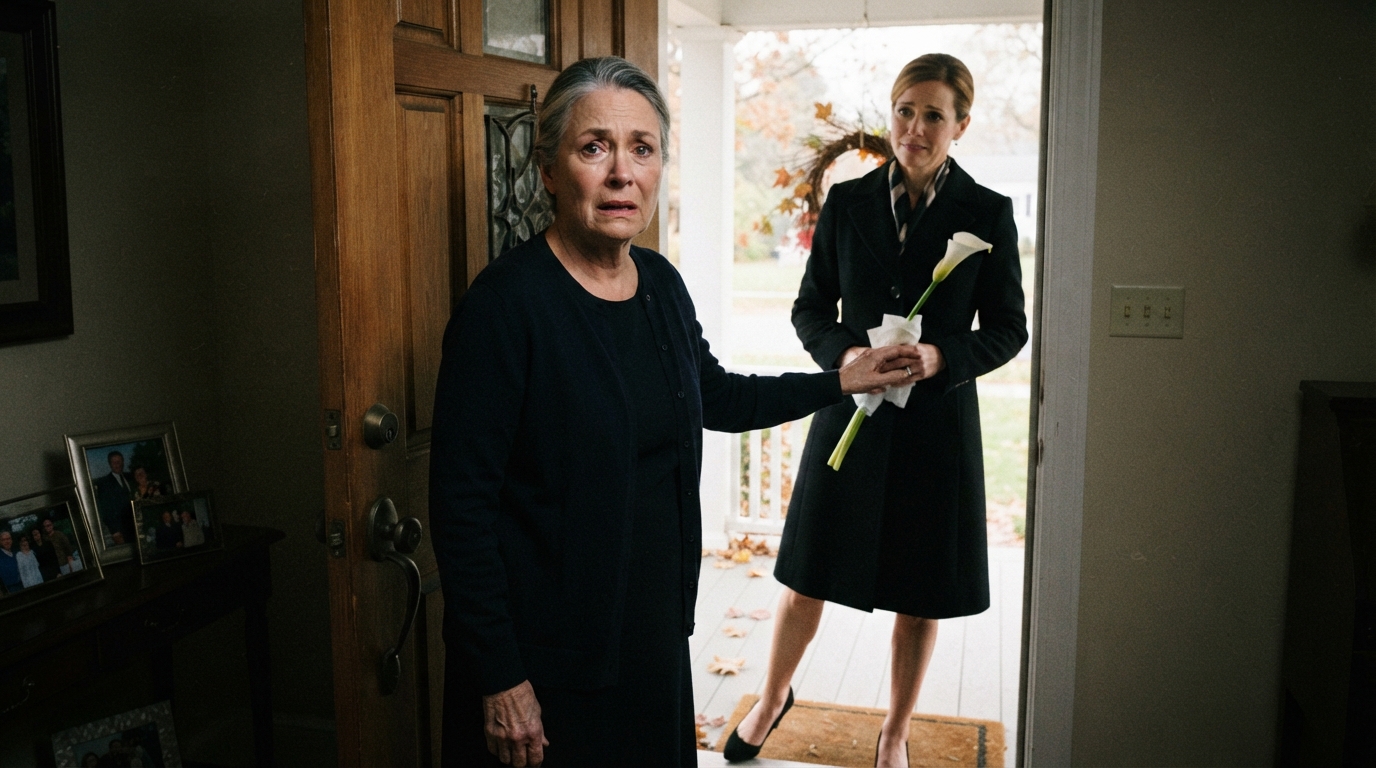
children believed I had abandoned their dying father, so I wasn’t welcome at his funeral. The next morning, Claire appeared on my porch in a wrinkled black dress, Robert’s wedding ring hanging
from her neck. I stared at her through the glass for several seconds before opening the door. “Why are you here?” I asked. She looked exhausted. Her eyes were swollen from crying. She held the
ring between two fingers as if it were something painful. “Because Robert lied to both of us.” I felt my stomach tighten. “What did he lie about?” Claire stepped closer. “He never wanted to leave
you.” I almost laughed. “He divorced me.” “I know.” “He married you.” “I know.” “He spent four months with you.” “I know.” “Then explain how he didn’t want to leave me.” Claire looked toward the
driveway. “Can I come inside?” Every instinct told me to shut the door. But something in her face stopped me. I stepped aside. She entered quietly and sat at the kitchen table where Robert and I
had shared thousands of breakfasts, arguments, birthdays, bills, and ordinary conversations. She placed the wedding ring on the table. “He gave me this the day we married,” she said. “He told me it
was temporary.” I stared at her. “Temporary?” “He said he needed me to play a part.” I sat across from her. “What part?” Claire pulled a folded envelope from her purse. “The woman he wanted
everyone to hate.” I didn’t understand. “Why?” “Because he believed you would never leave him otherwise.” I looked at the envelope. My hands were shaking. “Tell me everything.” She took a breath.
“But first, you need to understand something. Robert wasn’t afraid of dying. He was afraid of what would happen to you after he died.” I thought about the day he had come home from the hospital.
He had sat at the kitchen table with a folder in his hands. His face had been pale. I had poured him coffee. He hadn’t touched it. “The doctor says it’s stage four,” he told me. I remembered reaching
for his hand. “We’ll fight.” He pulled away. “No.” “Robert.” “I don’t want to fight.” “You can’t just give up.” He stared at me. “I’m not giving up.” “Then what are you saying?” He had looked at me with an
expression I couldn’t understand. “I want a divorce.” At the time, I thought the cancer had changed his mind. I thought fear had made him desperate to experience something different. Then he told
me about Claire. “She’s been there for me,” he said. “I want to spend whatever time I have left with her.” I had felt something inside me collapse. “You’re in love with her?” “Yes.” It was the lie that
destroyed me. I signed the papers three weeks later. I didn’t fight for the house because Robert told me he wanted everything simple. He said the children would eventually understand. They didn’t.
Our daughter Emily called me selfish. Our son David refused to speak to me. When Robert married Claire, the children attended. I stayed home alone. Four months later, Robert died. They blamed
me for not being there. They said I had abandoned a dying man. They didn’t know I had sat in my car outside the hospital three times, too afraid to go in because Robert had told the nurses I wasn’t
family anymore. I didn’t know Claire was there. I didn’t know what to believe. Now she was sitting in my kitchen telling me everything had been an act. “Why didn’t Robert tell me?” I asked. Claire
lowered her eyes. “Because he wanted you angry.” “Why?” “Because anger was safer than grief.” She handed me the envelope. “Open it.” Inside was a letter. Robert’s handwriting. I knew it
immediately. “Margaret,” it began. “If you are reading this, then I’m gone, and Claire has finally told you the truth.” My hands trembled. “I know you hate me. I hope you do. I needed you to hate me
because I knew you would spend your remaining years trying to save me if you believed I still loved you. You would have sold the house. You would have drained your retirement account. You would
have followed me through every treatment, every hospital room, every terrible night. I couldn’t let you do that.” I stopped reading. Tears blurred the page. Claire sat silently. I continued. “There is
something you don’t know. The cancer isn’t the only problem. The treatment will leave debt. A lot of it. I also discovered that my old business partner, Harold, had been using our company to hide
liabilities. If I die with you still legally tied to me, creditors may come after you. I asked my attorney to protect the house, your retirement, and the inheritance I had intended for you. But the easiest
way to protect you was to remove you from the legal mess entirely.” I looked at Claire. “The divorce?” She nodded. “Was real.” “But the affair?” “Not real.” “The marriage?” “A legal arrangement.”
“Why would you agree to that?” Claire’s eyes filled with tears. “Because Robert saved my life once.” She explained that years earlier, Claire had been a junior architect at Robert’s company. Her
abusive ex-husband had tracked her down at work and threatened her. Robert had helped her get a restraining order, paid for temporary housing, and protected her job. She had always considered
him a mentor. When he asked for help, she couldn’t say no. “He told me he needed someone to make you believe he had moved on,” she said. “He thought if you hated him, you’d stop trying to save
him.” “So you married him.” “Yes.” “And everyone believed you were his new love.” “Exactly.” I looked down at the ring. “Why did he give you the wedding ring?” Claire swallowed. “Because he said he
couldn’t wear it anymore.” I stared at the old gold band. “This was our ring.” “I know.” She took it off the chain. “He asked me to keep it until you were ready to know the truth.” I cried then. Not
quietly. Years of pain seemed to pour out at once. “He let my children hate me.” Claire looked devastated. “He thought they would eventually understand.” “They didn’t.” “I’m sorry.” “He could have
told them.” “He wanted them angry at him eventually.” “Eventually?” “He planned to explain everything after the divorce.” “But he died.” Claire nodded. “He ran out of time.” I closed my eyes.
Suddenly the last four months looked different. Robert had refused visitors on certain days. He had insisted Claire attend appointments. He had kept asking me to “move forward.” I had thought it
was cruelty. Perhaps it had been desperation. “What else is in the envelope?” I asked. Claire pointed to a second packet. It contained legal documents. The house had been placed in a protected
trust for me. My retirement accounts were untouched. Robert had purchased a life insurance policy naming me as beneficiary. There were letters from his attorney explaining the plan. The
$180,000 medical debt was covered by a separate insurance arrangement. “He protected everything?” I whispered. “Almost everything.” “What didn’t he protect?” Claire looked at me. “Your heart.”
That sentence broke me all over again. For the next several hours, Claire told me things I had never known. She told me about Robert’s final months. He cried about me. He kept photographs of our
wedding beside his hospital bed. He asked Claire to tell him stories about our children. He watched old videos of family vacations. He wrote letters he never sent. “He loved you,” Claire said. “Every
day.” “Then why did he make me believe he didn’t?” “Because he thought love meant sacrificing himself.” “That’s not love.” “I told him that.” “What did he say?” “He said he didn’t know how to do it
any other way.” I sat there until sunset. Claire finally stood. “I should go.” “Wait.” She turned. “Why did you come here today?” She looked at the ring. “Because I couldn’t carry his secret anymore.”
“And because you thought I deserved to know.” “Yes.” I looked at the woman my children believed had stolen their father. “Thank you.” She nodded. At the door, she stopped. “There’s one more
thing.” “What?” “Robert left something for Emily and David.” She handed me two envelopes. “He wanted you to give them these.” I stared at the names. Emily. David. “They may not believe me.”
“They don’t have to believe you.” “Then who?” Claire smiled sadly. “Their father.” I called Emily that evening. She didn’t answer. I left a message. “Please come to the house. There is something Dad
wanted you to have.” David called twenty minutes later. “What do you want?” “I have letters from your father.” “I don’t want anything from him.” “You need to hear what he wrote.” “He made his
choice.” “So did I.” There was silence. “What does that mean?” “Come tomorrow.” They came together. Emily looked angry. David looked tired. Neither hugged me. We sat at the kitchen table. I
placed the envelopes in front of them. “Claire came here this morning.” Emily’s expression hardened. “Why?” “To tell me the truth.” David laughed bitterly. “What truth?” “That your father never
loved her.” Emily stared at me. “Mom.” “Read the letter.” She hesitated. David opened his first. He read silently. Then his face changed. “What is this?” I handed him the legal documents. Emily read
hers. Tears filled her eyes. “He did this?” “Apparently.” David shook his head. “Why didn’t he tell us?” “Because he thought he was protecting me.” Emily whispered, “We blamed you.” I nodded. “I
know.” “We said horrible things.” “I know.” “We didn’t let you come to the funeral.” “I know.” Her face crumpled. “Mom, I’m sorry.” I reached across the table. She took my hand. David looked at me. “I
thought you left him.” “He asked me to.” “And you still loved him?” I laughed through tears. “Every day.” David covered his face. We sat together for a long time. Then Emily asked the question I had
been afraid of. “Did Dad suffer?” I nodded. “Yes.” “Was Claire with him?” “Yes.” “Did he talk about us?” “Constantly.” “And you?” “Every day.” Emily began crying. “I wish we had known.” “So do I.” David
stood and walked toward the window. “I hate that he made this decision for all of us.” “Me too.” That night, my children stayed for dinner. We talked about Robert. Not the dying man. Not the
husband who had divorced me. We remembered the father who taught Emily to ride a bicycle, who took David fishing, who burned pancakes every Sunday morning. We laughed. We cried. It was
the first time our family had felt like a family since Robert died. Over the following weeks, the truth spread. Robert’s attorney met with us and explained the financial arrangements. The house was
protected. My retirement was secure. The insurance would cover the remaining debts. Harold, the former business partner, was facing an investigation. Robert had spent his final months gathering
evidence. Claire had helped him organize it. He had protected me from the consequences. But he had also created a wound that might never completely disappear. One afternoon, Claire and I met
for coffee. “Do you hate him?” she asked. I thought about it. “Sometimes.” She nodded. “Me too.” “You loved him.” “I did.” “So did I.” She smiled sadly. “In different ways.” “Yes.” She reached into her
purse and pulled out the ring. “I think this belongs with you.” I took it. It was our wedding ring. Thirty-nine years of marriage reduced to a circle of gold. I held it in my palm. “What will you do now?” I
asked. “Leave Miami.” “Why?” “Too many memories.” “Where will you go?” “I don’t know.” I looked at her. “You can stay here tonight if you need somewhere.” She smiled. “Thank you.” She didn’t stay
that night, but she became part of our family in a strange way. Emily eventually invited her to dinner. David apologized to her. Claire apologized to them. None of us pretended everything was
simple. It wasn’t. But we stopped blaming each other for Robert’s choices. Months passed. I began rebuilding my life. I joined a book club. I started walking every morning. I traveled with Emily. I
visited David and his wife. I learned to cook for one without feeling sorry for myself. I also started volunteering at the hospital where Robert had spent his final weeks. I wanted to help families who
were facing the same fear. One evening, I received a package. Inside was another letter from Robert. This one was dated two days before he died. “Margaret,” it said, “I know you may never forgive
me. I hope you don’t feel obligated to. I made choices for you that I had no right to make. I called it protection because that sounded better than fear. The truth is, I was terrified. I was terrified that if
I let you stay, I would watch you destroy yourself trying to save me. I couldn’t bear that. But I also couldn’t bear the thought of leaving you with nothing. So I created a terrible solution. I asked the
person I trusted most after you to help me. Claire agreed. I know how this looks. I know how much it hurts. If I had one more year, I would tell you everything. If I had one more month, I would tell
you. If I had one more day, I would tell you. I ran out of time. I’m sorry.” I folded the letter. “I’m sorry too,” I whispered. Then I did something I never expected. I forgave him. Not because what he did
was right. It wasn’t. Not because the pain disappeared. It didn’t. I forgave him because carrying anger for the rest of my life would have meant letting his final mistake control the years he had left
me. Robert had tried to protect me and hurt me in the same decision. He had loved me and underestimated me at the same time. He had wanted to give me freedom but had taken away my right to
choose. Forgiveness didn’t erase any of that. It simply meant I was done letting it define me. A year after his death, Emily organized a small memorial dinner. She invited family and close friends.
Claire came too. There was a framed photograph of Robert on the table. It was one of my favorites. He was laughing, head tilted back, holding a fishing rod. David raised a glass. “To Dad.” Everyone
lifted their glasses. I looked at the photograph. “To Robert,” I said. “For all the good he gave us. And for the mistakes that taught us how important truth really is.” Claire looked at me. I smiled. After
dinner, Emily hugged me. “Mom, I want you to know something.” “What?” “I don’t think you abandoned Dad.” Tears filled my eyes. “Thank you.” “I think he abandoned the truth.” I nodded. “Yes.” “And
I’m sorry we blamed you.” “You were grieving.” “So were you.” “I know.” She hugged me tighter. That night, I went home alone. I opened the drawer where I kept Robert’s letters. I placed the wedding
ring inside. For thirty-nine years, that ring had represented a promise. For a while, I thought it represented betrayal. Now it represented something more complicated: a life that had been real even
if its ending had been terribly wrong. I closed the drawer. I didn’t need to wear it anymore. I didn’t need to destroy it either. Some memories don’t need to be erased. They simply need to be placed
where they no longer control you. The following spring, I sold the house. Not because I needed the money. Because I was ready. I bought a smaller place near the water. I painted the walls pale blue.
I planted roses outside the kitchen window. Emily helped me move. David brought boxes. Claire sent a card. The new house felt strange at first. Then, slowly, it became mine. Not Robert’s. Not the
home where we had spent thirty-nine years. Mine. One morning, I sat on the porch drinking coffee when my granddaughter ran into the yard. “Grandma!” she shouted. “Look!” She held up a flower.
I smiled. “That’s beautiful.” She climbed onto my lap. “Are you happy?” Children ask questions adults are often too afraid to ask themselves. I looked at the sunlight on the water. “Yes.” “Really?”
“Really.” “Even though Grandpa is gone?” I took a breath. “I miss him.” “Then why are you happy?” I kissed her forehead. “Because missing someone and being happy can exist at the same time.” She
thought about that. “Like when I miss Mommy at school?” “Exactly.” She smiled. Then she ran back outside. I watched her go. Robert had been gone for nearly two years by then. The pain was no
longer sharp. It had become something softer. A scar instead of an open wound. I sometimes wondered what our life would have looked like if he had told me the truth. Maybe I would have stayed.
Maybe we would have fought through his illness together. Maybe I would have helped him accept the inevitable. Maybe we would have spent his final months holding hands instead of living
separate lives. I’ll never know. But I do know this: I loved him. He loved me. And love doesn’t always make people make the right choices. Sometimes fear disguises itself as love. Sometimes
protection becomes control. Sometimes a person makes a decision they believe is noble and leaves everyone else carrying the consequences. I can’t change what Robert did. But I can decide what
his final mistake means to me. It doesn’t mean thirty-nine years were fake. It doesn’t mean I wasn’t enough. It doesn’t mean Claire stole my marriage. It means a frightened man made a terrible
decision because he didn’t know how to face his own death. And I survived it. More than that, I rebuilt. My children came back. My home became mine again. I found friendships I had neglected. I
learned how to travel alone. I learned how to laugh without guilt. And I learned that being left behind doesn’t mean your life is over. Sometimes it is simply the moment you finally begin living it for
yourself. The last time I saw Claire, she was leaving town. We stood outside my house. She hugged me. “He loved you,” she whispered. “I know.” “I wish he had told you.” “So do I.” She smiled. “I’m glad
you know now.” “Me too.” She looked at the ring around my neck. I had started wearing it on a simple chain. “Why do you wear it?” she asked. I touched it. “Not because I want the marriage back.”
“Then why?” I smiled. “Because it reminds me that the story wasn’t only about how it ended.” She nodded. “Goodbye, Margaret.” “Goodbye, Claire.” She walked away. I watched until her car
disappeared. Then I went inside. My daughter was waiting in the kitchen. “Mom?” “Yes?” “Do you ever wish Dad had done things differently?” I looked out the window. “Every day.” “Are you angry?”
“Sometimes.” “Do you forgive him?” I smiled. “I think so.” Emily nodded. “I think he would have liked that.” “Maybe.” She took my hand. “I’m glad you’re here.” I squeezed hers. “Me too.” That evening, I
sat alone on the porch. The sky turned orange over the water. I thought about the woman I had been when Robert asked for the divorce. She had believed her life was ending. She had believed
another woman had replaced her. She had believed thirty-nine years meant nothing because her husband had chosen someone else at the end. She had been wrong. Thirty-nine years cannot be
erased by four months. A marriage isn’t invalidated by its ending. Love doesn’t become worthless because someone makes a terrible choice. And a person’s value doesn’t disappear because
someone stops choosing them. Robert had chosen me for thirty-nine years. In his final months, fear made him choose a different path. It hurt. It devastated me. But it didn’t erase the life we had
shared. The next morning, I opened my jewelry box and removed the ring from the chain. I held it for a moment, then placed it inside the box beside a photograph from our wedding. I closed the lid. I
wasn’t putting Robert away. I was putting the pain away. There is a difference. I still miss him. I still talk to him sometimes when I’m alone. I still hear his laugh in certain songs. I still make his favorite
soup occasionally without realizing it. But I no longer wake up angry. I no longer wonder whether I was enough. I know I was. And when my children ask me about their father, I don’t tell them the
story of the man who divorced me. I tell them about the man who taught their daughter how to ride a bicycle, who danced badly at weddings, who planted tomatoes in the backyard, who loved
terrible detective shows, and who spent thirty-nine years building a life with me. Then, if they ask about his final months, I tell them the truth. He was scared. He made a mistake. He tried to protect
us and hurt us instead. But he loved us. And sometimes, that is the most honest ending we can give to an imperfect life. I used to think Robert’s last decision had stolen something from me. Now I
understand it also gave me something I never expected. It gave me the chance to discover who I was without him. Not the abandoned wife. Not the woman replaced by someone younger. Not the
mother blamed by her children. Just Margaret. A woman who had loved deeply, lost painfully, survived honestly, and learned that life doesn’t stop when someone walks away. Sometimes, after the
worst door closes, another one opens quietly. And if you’re brave enough to walk through it, you may discover that there is still a whole life waiting on the other side.